Inductors rarely get the same attention as processors or memory chips. They are passive components, cheap, and they get treated like commodities until the day they are not available.
Then the whole timeline shifts, a line shuts down, and the OEM gets a call nobody wanted to make.
In this guide, we’ll share what you need to understand about inductors in order to source them well, avoid the most common mistakes, and build a solid supplier strategy.
Why inductors are a supply chain risk, not just an engineering component
Procurement teams often learn about inductor shortages the hard way, when engineering flags a sourcing problem just before the build.
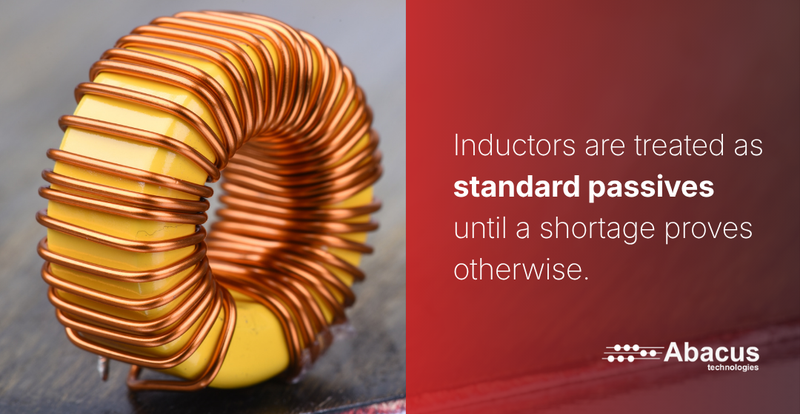
The challenge is that inductors are treated as standard passives until a shortage proves otherwise.
Several factors make inductors particularly difficult to manage from a supply chain perspective:
- High cross-industry demand: Inductors are used in many high-demand applications like power electronics, automotive systems, telecommunications equipment, and consumer devices. A surge in one sector can pull supply from electronic components your programs depend on.
- Limited substitution in many designs: Unlike some passives, inductors have multiple interdependent specifications (see table below) that must all match. Engineering signoff takes time, so it’s best not to leave it until a disruption occurs.
- Raw material and manufacturing concentration: Core materials like ferrite and specialized winding processes can create bottlenecks. When production is concentrated in a small number of facilities, it increases exposure to disruption.
- Lead time variability: Standard inductors from major manufacturers can carry lead times during tight market conditions. Custom or specialty parts can take even longer.
What procurement teams need to understand about inductors
Managing inductors reactively is expensive. Managing them proactively is not.
You do not need to be an engineer to source inductors well, but you do need to understand which specifications drive sourcing decisions and why. That knowledge helps you ask better questions, evaluate alternatives, and collaborate with engineering before a shortage forces a rushed decision.
Key specifications that affect sourcing
The table below covers the specs that matter most from a procurement perspective. It’s not a full engineering reference, but it contains everything you need to have an informed conversation with both engineering and your suppliers.
| Spec | What It Measures | Why Procurement Cares | Common Range |
|---|---|---|---|
| Inductance Value (L) | Energy storage capacity | Sets compatibility: wrong value means the part cannot substitute | nH to mH |
| Current Rating (Isat / Irms) | Max current before performance drops | Risk of failure if mismatched: Critical for switching regulators | 0.1A to 50A+ |
| DC Resistance (DCR) | Wire resistance at DC | Higher DCR = more heat and efficiency loss, affects thermal design | 0.01Ω to 10Ω |
| Size / Form Factor | Physical package dimensions | Limits substitution options: Custom sizes shrink your supplier pool | 0402 to 2220 (inch code) |
| Inductance Tolerance | Allowable deviation from rated value | Affects substitution flexibility | ±2% to ±20% |
| Self-Resonant Frequency (SRF) | Frequency where inductor becomes capacitive | Operating frequency must stay below SRF: Wrong type will not function | MHz to GHz range |
7 procurement-focused tips for sourcing inductors
1. Avoid single-supplier dependency
Relying on one manufacturer for a critical inductor is a risk that shows up eventually. Allocation events, production disruptions, and quality holds all become your problem when there is no second source.
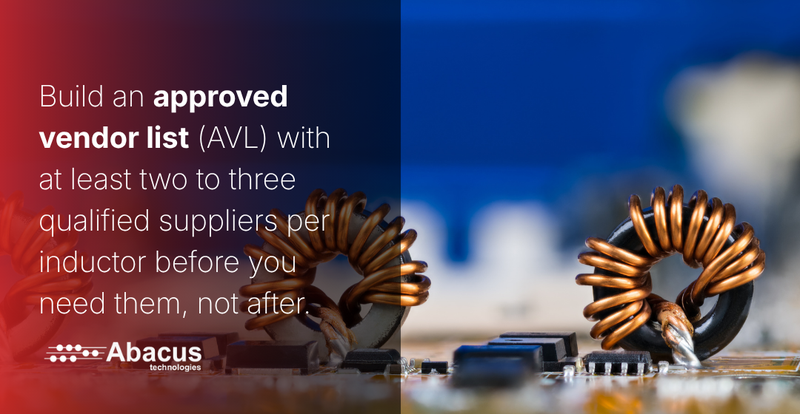
Build an approved vendor list (AVL) with at least two to three qualified suppliers per inductor before you need them, not after.
2. Prioritize standardized, widely-available parts
Custom or niche inductors significantly reduce your sourcing options. Every time engineering specifies a proprietary package or non-standard value, you are adding a constraint that limits your ability to find alternatives.
Push for design standardization wherever the application allows it. Why? Standard parts have more supplier options, shorter lead times, and broader cross-reference availability.
3. Evaluate lead times and supply consistency, not just price
A supplier who is 8% cheaper but consistently misses delivery windows costs more in the end. Track lead time performance over time and look at historical variability, not just the quoted number.
4. Assess supplier manufacturing footprint
Geographic concentration in manufacturing is a real risk, because it leaves them vulnerable to natural disasters, geopolitical shifts, port disruptions, and energy constraints.
When evaluating suppliers, favor those with diversified production across multiple facilities or manufacturing partners in different regions.
5. Plan for second sources during the design phase
The best time to qualify a second source is during the design phase, not during a shortage. Align with engineering early to identify acceptable alternatives.
6. Build strategic inventory buffers
Just-in-time inventory management works well for high-volume, predictable components, but it does not work well for components with volatile demand and long lead times.
Segment your inductor inventory by criticality and risk. Carry safety stock if you can–the holding cost is almost always less than the cost of a line-down event.
7. Monitor market trends and demand signals
Inductor demand fluctuates with macro market trends. Staying informed on industry demand shifts gives you more lead time to build inventory, secure allocation, and qualify alternatives.
Common procurement mistakes CMs make when sourcing inductors
Most inductor supply chain problems are predictable. These are the mistakes that show up most often:
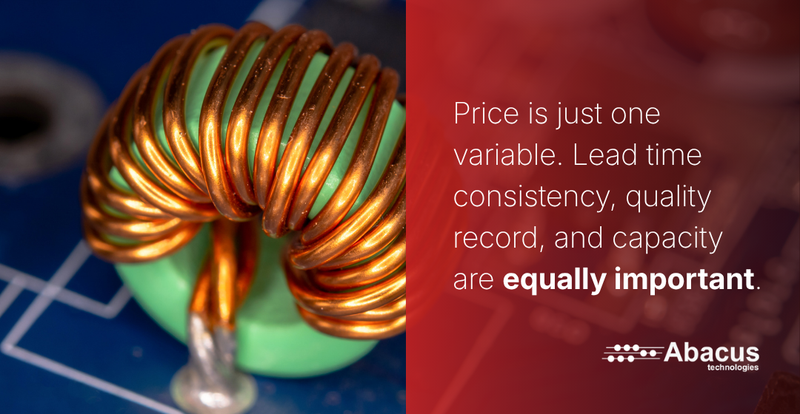
- Choosing the lowest-cost supplier without evaluating reliability: Price is just one variable. Lead time consistency, quality record, and capacity are equally important.
- Not aligning with engineering on acceptable alternatives: When procurement and engineering operate in silos, approved alternatives take longer to qualify. That delay matters most when supply is already constrained.
- Reacting to shortages instead of planning ahead: Emergency buys cost more, often come from brokers with less traceability, and take longer than planned purchases. The best time to solve a shortage is before it becomes one.
- Treating inductors as a commodity class: Not all inductors are interchangeable. Each application has specific requirements, and substitution requires engineering review.
- Broker buys without traceability: Purchasing from brokers without documented traceability introduces serious risk. If you are buying outside of authorized channels, verify certificates of conformance, test reports, and chain-of-custody documentation before those parts touch a board.
- No second source approved: A single-source inductor with no qualified alternative is a liability. The approved vendor list should never have a line item with only one qualified supplier for any inductor that is critical to a build. Identify and qualify second sources during the design phase, not during a shortage.
- NRND parts in active builds: Not Recommended for New Designs (NRND) is a manufacturer signal that a component is on its way out. Supply will be prioritized for existing customers, last-time buy windows will close, and eventually the part goes end-of-life. Running an active production build on an NRND inductor without a transition plan is a ticking clock. Audit your BOMs regularly for NRND status. When you find one, engage engineering immediately to qualify an active replacement before the last-time buy window closes or supply dries up entirely.
- Overcommitment due to NCNR terms: Non-Cancellable, Non-Returnable purchase orders are common for allocated or long-lead inductors. They exist because suppliers need demand visibility to manage production. The problem is that NCNR commitments made under pressure can leave you holding excess inventory if the program changes, volumes shift, or a design revision makes the part obsolete. Before committing to NCNR terms, align internally on build forecasts, get engineering to confirm the part is locked in the design, and understand the financial exposure if the program is delayed or cancelled.
How to evaluate inductor suppliers
You can use this checklist to qualify new suppliers or evaluate existing ones.
These are the questions you need to ask, and the red flags to look out for, when choose a reliable electronic components supplier:
| Evaluation Area | What to Ask | Red Flags |
|---|---|---|
| Lead Time | What is your average lead time? How has it varied in the past 12 months? | Vague answers, no historical data |
| Authorization | Are you an authorized distributor for these manufacturers? | The supplier is not an authorized distributor for the manufacturer you need |
| Manufacturing Footprint | Do you have production in multiple regions? | Single-country manufacturing, especially concentrated in one facility |
| OEM Relationships | Which OEMs have you supplied? Can you provide references? | Unable to name customers or provide verification |
| Safety Stock | Do you offer consignment or safety stock programs? | No inventory programs, no flexibility on minimum order quantities (MOQs) |
| Cross-Compatible Parts | What approved substitutes exist for this part number? | No alternative options or cross-reference documentation |
| Financial Stability | How long have you been in business? Who are your primary manufacturing partners? | New entrant with no verifiable history, no major manufacturing relationships |
| Communication & Transparency | How do you communicate supply disruptions or allocation changes? | Reactive-only communication, no proactive shortage alerts |
How cross-functional alignment improves outcomes
Inductor sourcing gets harder when procurement and engineering work independently, but the opposite is true when these teams work together from the start. Why?
- Engineering can flag acceptable tolerance ranges before procurement starts sourcing, which broadens the qualified supplier pool.
- Procurement can flag supply risk on specific parts during the design phase, while there is still flexibility to adjust the design.
- Operations can share build forecasts that inform safety stock decisions before lead times extend.
If you are a program manager at a CM, this is the conversation worth having with your OEM early:
- What are the acceptable tolerances on critical inductors in this design?
- What alternates have been evaluated?
- Are we on the vendor list?
Setting up that alignment before a disruption is what separates a managed supply chain from a reactive one.
Why choose Abacus Technologies as your electronic component supplier
Inductors are not glamorous. They don’t get mentioned in earnings calls, but they shut production lines down.
Treating inductor sourcing as a strategic decision is the difference between managing your supply chain and being managed by it. That means building an AVL before you need it, understanding the specifications that limit substitution, and aligning with engineering early enough to have options.
Abacus Technologies has been working with CM program teams and OEM supply chain organizations for decades. We carry a number of industry-standard certifications including but not limited to ISO 9001:2015, AS9120B, and AS6081:2012 to ensure consistent quality, traceability, and supply chain integrity. For over 40 years, we have helped procurement teams keep production moving through shortages and supply challenges that stop everyone else.
We can supply inductors from a wide range of industry-leading manufacturers, including:
- Coilcraft
- Murata
- C&D Tech
- Vanguard
- API Delevan
- Sumida
- Weurth
- Toko
- TDK
- Taiyo Yuden
- SEM
- Central Tec
- Panasonic
- Vishay
- Inductor Supply
When reliability matters, Abacus Technologies has your back.
Request a quote
Contact us today or see our line card to ensure that no inductor or any other electronic component slows your production line.
Request a QuoteFrequently asked questions about inductors
Why are inductors hard to source?
Inductors are used across a wide range of industries including power electronics, automotive, telecommunications, and consumer devices. When any of those sectors ramps production, demand for inductors increases across the board. Geographically concentrated manufacturing, limited raw material suppliers for core materials, and long lead times for specialty parts can make sourcing extremely volatile.
Can inductors be substituted easily?
Not always. An inductor substitute must match the inductance value, current rating, DCR, form factor, and tolerance of the original part, and it must be qualified by engineering before it can be used in production. The teams who manage substitution well are the ones who have already identified and pre-approved alternatives before they need them.
What affects inductor lead times?
Lead times are driven by raw material availability (particularly ferrite cores), manufacturing capacity at a relatively small number of specialized facilities, and overall market demand. Standard parts from major manufacturers typically run 12 to 26 weeks under tight conditions. Custom or specialty inductors can run significantly longer. Geographic concentration in manufacturing also means that regional disruptions can extend lead times with little warning.
What is the inductor unit?
Inductance is measured in henries (H). In most electronic applications, you will encounter millihenries (mH), microhenries (uH), and nanohenries (nH).
How do inductors in series and inductors in parallel behave differently?
When inductors are placed in series in a circuit, the total inductance adds up, similar to resistors in series. Inductors in series increase the total inductance of the circuit. When inductors are placed in parallel, the total inductance decreases, following an inverse sum formula similar to resistors in parallel. Understanding inductors in circuits, whether in series or parallel configurations, matters for engineering. From a procurement perspective, what matters is whether the specified part is available. Design flexibility in how inductors are used in circuits can sometimes provide engineering workarounds during a shortage.