
Industry News
The Next Phase of Manufacturing Automation
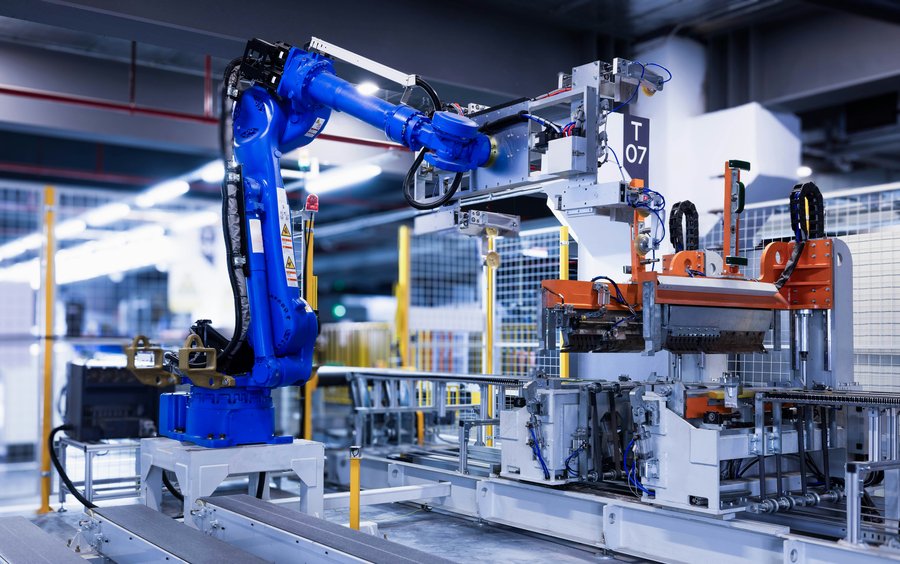
The electronics manufacturing landscape is rapidly shifting beyond basic automation by stitching factory floor operations together with artificial intelligence. We are seeing a massive push toward closed-loop control systems where decisions are made automatically using real-time data from inspection and testing. Furthermore, digital twins are increasingly being utilized to de-risk production line changes and optimize workflows before physical implementation. For our B2B clients, this represents a critical pivot toward treating data utilization as a core competitive tool rather than a secondary project. When speaking with your accounts, focus on how our components can seamlessly integrate into these highly inspectable and automated new product introductions.
Source: EC Electronics
Intel's Agentic AI Architecture Strategy
Intel recently released fresh details regarding a groundbreaking reference architecture designed specifically to handle the complex demands of new AI models. Through a strategic partnership with the startup SambaNova, this design innovatively combines traditional GPUs, Intel processors, and Reconfigurable Dataflow Units to process workloads efficiently. Slated for enterprise and cloud release later this year, the architecture aims to create vastly smoother processing pipelines for heavy data centers. For our manufacturing clients, this signals an upcoming shift in server design requirements and advanced power topologies. We should use this news to proactively discuss how Abacus Technologies can supply the robust power management components needed for these next-generation deployments.
Source: CRN
The Future of Micro-Manufacturing: Desktop MEMS
The traditional landscape of Micro-Electro-Mechanical Systems (MEMS) production is undergoing a radical shift. Historically, creating these tiny sensors and actuators required massive, billion-dollar "fabs" and months of lead time. Inchfab, a startup emerging from the University of Utah, is disrupting this model by shrinking the entire cleanroom process down to a desktop-sized system.
By utilizing a modular, atmospheric-pressure approach, Inchfab eliminates the need for expensive vacuum chambers and specialized infrastructure. Their "fab-in-a-box" technology uses micro-robotic arms to move silicon wafers between specialized modules for etching, deposition, and lithography. This decentralized approach allows for:
- Rapid Prototyping: Reducing development cycles from months to days.
- Lower Costs: Making micro-fabrication accessible to startups and universities.
- On-Demand Manufacturing: Enabling local, small-batch production of specialized sensors.
This transition from centralized giants to agile, localized manufacturing mirrors the evolution of the computing industry, potentially sparking a new era of hardware innovation.
Source: IEEE Spectrum
Current Events
Deepening US-Taiwan Tech Collaboration
Just late last week, new developments surfaced regarding the evolving and symbiotic AI chip supply chain between the United States and Taiwan. The latest policy initiatives focus heavily on cementing high-tech collaboration to secure the complex economies driving the global AI revolution. Concurrently, the federal government is making a massive legislative push to onshore chip manufacturing, aiming to fulfill a large portion of domestic demand locally. For our sales professionals, this dual approach means we must stay highly agile in navigating shifting procurement channels and potential new tariffs. It serves as an excellent icebreaker to discuss supply chain resilience and multi-sourcing strategies with our B2B customers.
Source: The Stimson Center
Unprecedented Equipment Imports in Asia
Recent trade analysis published late last week confirms that overseas imports of semiconductor manufacturing equipment have hit unprecedented, record-breaking levels. Despite ongoing global export controls, certain international markets have aggressively stockpiled machinery to accelerate their drive toward total domestic component substitution. This massive geopolitical dynamic directly impacts global raw material availability and the competitive landscape for high-end electronic components. For our technology manufacturing clients, these sudden supply chain realignments could introduce unexpected delays or volatility in component pricing. You can easily leverage this event to guide your buyers on the critical importance of inventory buffering and long-term risk mitigation strategies.
Source: Silverado Policy Accelerator